Showing posts with label books. Show all posts

Monday, August 17, 2015

Roaring Twenties

Along with vintage sewing machines, sometimes I come across vintage reading materials. I've reported on sewing books in prior posts and now I'll share pages from Needlecraft, a large format newspaper type of periodical. At the time of its publication it came out monthly in a non-bound set of pages that are 15" by 11". There were six editions folded neatly and resting in an oblong basket for only $2 at an estate sale and I was intrigued. They contain stories, patterns, advertisements, and readers questions and comments. My set starts with December 1919 and ends with January 1921 but not all issues within that time frame. Many of the articles emphasize that with the war going on they need to be careful, etc., and to remind women to support their soldiers.
Here's a portion of the leading page of one issue from 1920, over 95 years ago:
Needlecraft July 1920
That's a lot of reading! But it is interesting and a slice of life at that time: the need for high quality items in your hope chest, possibly because older women will be looking to see. There seemed to be a great deal of articles and patterns for underwear: making, embellishing, the importance of wearing underwear for hygiene purposes. Interesting...

Along with the actual patterns for crochet and tatting, there were fashion patterns you could send away for:

Needlecraft July 1920, pg. 18
 A reminder at the end states they are still twelve cents each. Times have changed and, thank goodness, styles have too. I can't imagine any of the above fashions were flattering (but probably cool and comfortable in their non-air-conditioned homes).

What magazine would survive without advertisements? There were some products that have fallen by the wayside like freckle cream, Del-A-Tone (hair removal), and cures for stammering or deafness but others remain: Bayer Aspirin (Genuine Aspirin), Cream of Wheat, and Borden's Eagle Brand. Here's a full page ad for Perfection Oil Cook Stoves and Ovens:
Needlecraft July 1920 back page advertisement
Each issue contained several contests you could enter and had a nifty list of prizes such as a manicure set, magnifying glass, or silk handkerchiefs for children. Some things never change and the human spirit to win something for nothing does also. Or maybe this is the American spirit?

I might enjoy sewing machines from earlier eras but I'm glad for electricity, central heating and cooling, and indoor plumbing. This look into the past is interesting but I'm not looking to live there!


Sunday, April 12, 2015

So Many Books, So Little Time

The title of this post is a sentiment I had on a t-shirt from a friend years ago (where is that shirt now?) and it continues to resonate as I grow older. The list gets longer, not shorter with each book I read so how does that happen? While we were in Portland one of the landmarks is Powell's Books, a huge independent bookstore that has remained in business when others have closed their doors. While we can blame that on Amazon, this mega-book dealer has also enabled small dealers to thrive so I don't want to vilify Amazon either. Powell's downtown Portland store is called Powell's City of Books and it does seem to be its own small city, taking up the whole city block with multiple levels that you need a map to navigate. I went right up to the sewing section and found something you don't find at other bookstores: old and new books. They buy used books and include them for your browsing and buying pleasure. It was exciting to see some of the vintage books I've written about in an earlier post as well as those I've only heard about. I restrained myself and only bought two books and made note of a third title I coveted. My husband bought some very good gardening books (as well as a cribbage board so I could finally learn).

On the flight home I read cover to cover The Encyclopedia of Sewing Machine Techniques:
The Serger's Technique Bible by Julia Hincks and  Encyclopedia of Sewing Machine Techniques by Nancy Bednar & JoAnn Pugh-Gannon    
It was a wonderful book from applique to tucks on how to use your sewing machine and special presser feet or needles or thread to create special effects. Lace insertion was not enough: it included how to make your own lace with your sewing machine! It's not often you want to read an encyclopedia, but it was a great ride home with Bednar & Pugh-Gannon's book.

Since I now have five sergers, The Serger's Technique Bible explained the types of stitches and showed how they should look and what they are best used for. As with so many things, I just dove into sergers without much practical experience and this book helped me see what had only been written about in some of my serger manuals. What are all those special feet for and what is a cover stitch? Now I know for sure (but I'm not sure if I have a serger that can do a cover stitch!)

There was one book I ordered from Amazon that I looked at while at Powells but determined it wasn't worth the $25 cost. That's right, I got it for only a dollar plus $4 shipping. You can call me cheap, that's okay, but I had already supported the independent bookstore enough for one trip.
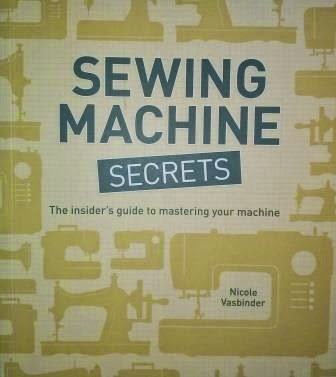
SM Secrets by Nicole Vasbinder
I don't think these are actual secrets but more about how to use your machine to its fullest. There is discussion about pros and cons of vintage and new sewing machines that is fair, which features are essential (adjustable needle position) and those that are considered optional (needle up/needle down).

Although I have had similar books in the past, the quality of the printing, illustrations, and photos are excellent in these newer versions. For a sewer who has been at it for awhile, the Secrets book would be a nice read, and those new to serging could put the Serger's Bible into use, but the advanced sewer could really get lost in the Encyclopedia of SM Techniques. Have you read a novel that was so good you hated to see it come to an end? When you read one of the books reported on in this post it doesn't have to come to an end: now you can go practice on your sewing machine to see if you can master any of the new ideas that have intrigued you. And now I bid you adieu as I move from my computer to my sewing machine to try out "off the edge scallops."

Monday, January 26, 2015

The Library

Before we had YouTube to give us guidance in how to do almost anything, sewing included, there were books for instruction. I've collected a few, shared a few, and now want to share some of mine with you. Starting with the newest, I have several copies of  Reader's Digest Complete Guide to Sewing:

1978 edition
This is a nice introduction to sewing, including basic supplies and why you would need them, garment construction, home decor, and a small section of projects for your home at the end to put your skills to use. I like that it is not published by a particular home sewing group so they are impartial to brands of machines and accessories:

Types of bobbins and how to remove them
The illustrations are sure 1978 as well as the styles but the information is still sound and useful.

Next up is a McCall's Sewing Book:


1968 edition
This is getting funnier with "mod" illustrations with only black and pink for color. Quite a few pages are devoted to choosing the right pattern, but then McCalls could sell you one, if you wish.  Fabric and tools are included along with garment construction and a final chapter on home decor. No photographs, only those black line drawings but the skills and techniques are still correct:
How do you wear a dress for sports?

Let's learn to use a ruffler!
I wouldn't use them for fashion advice! The cover notes it features the "New Sizing" and this is something I recall as an improvement, something closer to what you would find in a store. The home decor section actually gives a good step by step guide to making slipcovers so maybe this book could come in handy sometime.

I think I stumbled across both of the above books at sales and were only a dollar or two but the following book was recommended through one of the sewing machine forums I subscribe to and I actually purchased it for $7-8. I was not disappointed:
1954 edition
This Singer Sewing Book cover is rather uninviting but it might have had a colorful dust jacket when new.  What makes it so much fun are the articles such as "Your attitude toward your machine", "Room of her own", and "Dressing your table" or bed, or closets.  There is information about using what was available for your then new, now vintage, sewing machine. Various hemmers and binders, and even a section on "fashion stitches" which turns out to be free motion embroidery. There are 12 double sided pages of color photographs, as the rest of the book is line drawings in black and white.

Using a buttonhole attachment
 Just like the other books on sewing, garment construction, mainly for women is featured with a section on home decor at the end. The projects are decidedly fussier with ruffles, and special bindings.
Embellishments!


There are a few pages at the very end about zigzag sewing machines and how if you have one you "are in great good fortune, because a machine not only does plain stitching but it embroiders, monograms, decorates with motif and borders...The Singer Zigzag Machine is an example of modern engineering wizardry" and indeed it was. And it still is. I don't want to think about how far we have come because what was done in the past with these fine sewing machines was engineering wizardry that has not been matched with our computerized sewing machines. Those who sew with vintage sewing machines know they are beautiful as well as functional.  And there's always one calling your name.

Thursday, July 31, 2014

Reading Material

It seems it's not enough to just work on vintage sewing machines, but now I like to read about them. So where do I go to find any real authority? There are book published but very few so I have found myself reading a few blogs but the so-called mother load of information is on the Yahoo groups sites. It seems there is a group for anything and everything but I have joined and read daily the following:

Bernina Thirty Somethings
Elna Heirloom Sewing Machines
Elna Sergers
Necchi Sewing Machine Club
Old Kenmore Sewing Machines
Old Pfaff Forum
Viking Sewing Machines pre-1980
Vintage Japan Sewing Machines
Vintage Sewing Machine Repair
Vintage Singers
We Fix It

I also belong to Treadle On but do not have their messages sent to me daily because they are too active with up to 30 messages a day! I subscribe to the digest format so once a day I get one email with all of the posts for each group for that day (if any). This gives me an overview of what's going on, if I can contribute, or when I just scan through because I don't have that model or problem. There are a few experts that chime in, always patient with the newbies, giving suggestion of what to try next. I can't help but admire their generous nature.

When it comes to books, they are more difficult to find, and usually deal with machines I'm not as interested in. BUT there are a few I do use (and like):

An online book, How to Refurbish Sewing Machines, A step-by-step guide for Singer models 66, 99, 15K & 201 is a series of pdf's that I have found very useful, especially the explanation of the tension assembly. And it's free. (edit: This is no longer a free item but you can purchase and help their community)

One book I wish I could purchase for myself is Sincere's Sewing Machine Service Book but it's selling for $200 now so I will have to settle for inter-library loan. Never mind that the last edition was in 1974, it covers many of the classics like the Singers listed above plus the Featherweight, White, New Homes, Sears, Wards, Western Auto, Pfaff 130,230,360, Riccar, Adler, Elna, Necchi, and many Japanese models. The diagrams are good and the explanations are fairly clear. But $200? Not at this time! (edit: it is now available to read online, just Google to find its current location)

There is a list of recommended books at ISMAC that you might find interesting. You might find the whole ISMAC site interesting but I think it's poorly designed and laid out yet it still contains a wealth of information.

Sorry there are no pretty pictures of sewing machines or projects in this post but maybe you will take a look at some of these recommendations and learn something new as I have!